
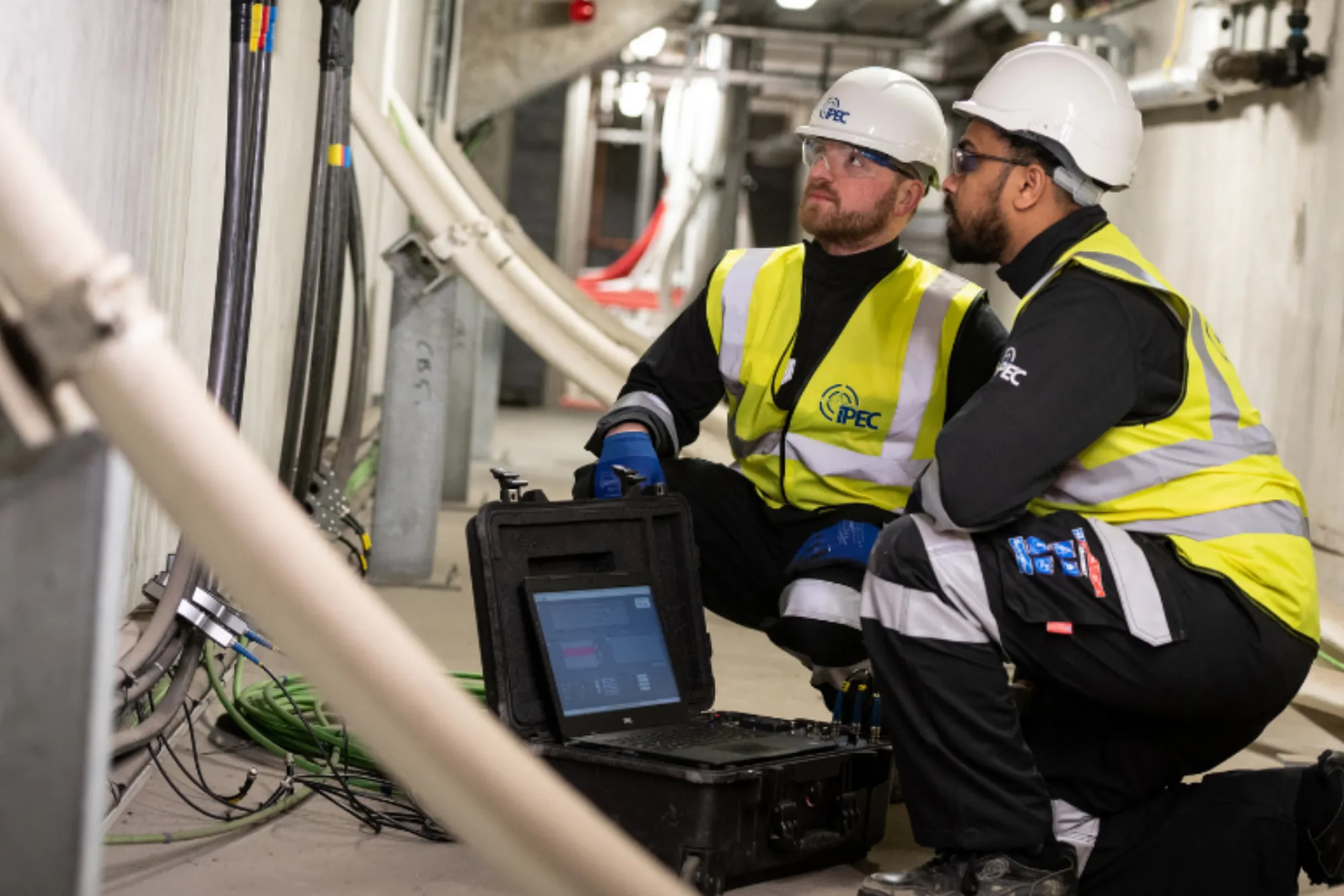
Partial Discharge (PD) Testing in UAE
Partial discharge (PD) is an early indicator of insulation degradation in medium and high voltage equipment. These small electrical sparks occur within air pockets in insulation, gradually causing damage that can lead to equipment failure.

What is Partial Discharge?
Partial discharge (PD) testing is a non-invasive method used to evaluate the condition of electrical insulation systems. This technique detects insulation breakdowns that occur when certain components fail to withstand the electrical field, often due to aging, design flaws, subpar workmanship, inferior materials, or contamination like sludge. With a strong track record in the UAE and Middle East, AssetConditionMonitoring offers PD testing solutions utilizing a range of measurement technologies suited to various applications. Recognized widely for its reliability, PD testing has become an essential tool for monitoring the health of electrical infrastructure. Reach out to us to learn more about our partial discharge testing services in UAE & MENA Region.
Online Partial Discharge Testing and Partial Discharge Monitoring Systems are essential for assessing the condition of:
- Electrical cables and terminations
- Power transformers and bushings
- Switchgear (with PD monitoring systems)
- Motors and generators
PD testing helps predict asset reliability and prevent costly outages. Implementing an Online Partial Discharge Monitoring System ensures continuous tracking and early fault detection.
Types of Partial Discharge
Here are the main types of partial discharge (PD) commonly observed in electrical insulation systems:
Corona Discharge
Description
Discharge in gas (usually air) around conductors or sharp edges
Typical Location
Overhead lines, bushings
Cause
High electric field at conductor edges
Surface Discharge
Description
Discharge along the surface of insulation
Typical Location
Insulators, cable terminations
Cause
Contamination, moisture on insulation
Internal (Void) Discharge
Description
Discharge within voids or air pockets inside solid or liquid insulation
Typical Location
Solid insulation in cables, transformers
Cause
Voids from aging or manufacturing defects
Tracking Discharge
Description
Surface discharge forming a carbon path
Typical Location
Polluted/damp insulation surfaces
Cause
Repeated discharges leading to conductive path
Treeing Discharge
Description
Branch-like discharges progressing through insulation
Typical Location
Solid polymer or oil-impregnated insulation
Cause
Long-term electrical stress and degradation
Floating Electrode Discharge
Description
Discharge involving an ungrounded metal part inside insulation system
Typical Location
Switchgear, transformers
Cause
Capacitive coupling to a free-floating conductor
Effective Partial Discharge (PD) Testing Methods
Partial discharge testing is best performed online to avoid power interruptions. Advanced techniques support accurate partial discharge monitoring across MV/HV assets like switchgear, cables, and bus ducts.
Ultrasonic Detection
Detects corona PD through high-frequency acoustic signals.
TEV (Transient Earth Voltage)
Ideal for internal PD detection in metal-clad equipment like switchgear.
UHF Monitoring
A non-contact method for PD signals in Gas Insulated Switchgear and terminations.
HFCT/RFCT Sensors
Enable online partial discharge testing on energized cables using current transformer.
Deploying an online partial discharge monitoring system ensures early fault detection and asset reliability. Use a dedicated partial discharge monitoring system for switchgear for continuous PD tracking.
Why Choose Us?
Technomax is a trusted name in partial discharge monitoring services, backed by years of experience in condition monitoring across diverse industries throughout the Middle East. Our in-depth expertise spans power, oil & gas, manufacturing, and utilities, enabling us to deliver reliable online partial discharge testing tailored to each sector's unique needs. With advanced diagnostic tools and a proven track record, Technomax ensures early fault detection, extended asset life, and uninterrupted operations.
-
Extensive Industry Experience
Years of successful PD testing across power, oil & gas, utilities, and industrial sectors in the Middle East.
-
Advanced Testing Technologies
Utilizes ultrasonic, TEV, UHF, and HFCT/RFCT methods for accurate online partial discharge monitoring.
-
Comprehensive Asset Coverage
Expertise in PD testing for switchgear, transformers, cables, motors, and generators.
-
Customized Solutions
Tailored monitoring systems designed to meet specific asset and industry requirements.
-
Real-Time Monitoring Systems
Deployment of online partial discharge monitoring systems for continuous condition tracking.
-
Skilled Technical Team
Certified professionals with deep knowledge of insulation systems and PD interpretation.
-
Non-Invasive Testing
Testing carried out without disrupting operations, ensuring zero downtime.
-
End-to-End Support
From system design and installation to data analysis and reporting.
What are the methods of detection of partial discharge?
Ultrasonic Detection
- Detects: Corona and surface discharges.
- How it Works: Captures high-frequency acoustic emissions generated by PD.
- Use Case: Effective in open-air systems and accessible insulation surfaces.
Transient Earth Voltage (TEV) Detection
- Detects: Internal discharges in metal-clad switchgear.
- How it Works: Measures high-frequency voltage pulses on metal surfaces caused by PD activity.
Ultra High Frequency (UHF) Detection
- Detects: Electromagnetic emissions from PD.
- How it Works: Uses UHF antennas to pick up signals; ideal for enclosed systems.
- Use Case: Common in Gas Insulated Switchgear (GIS).
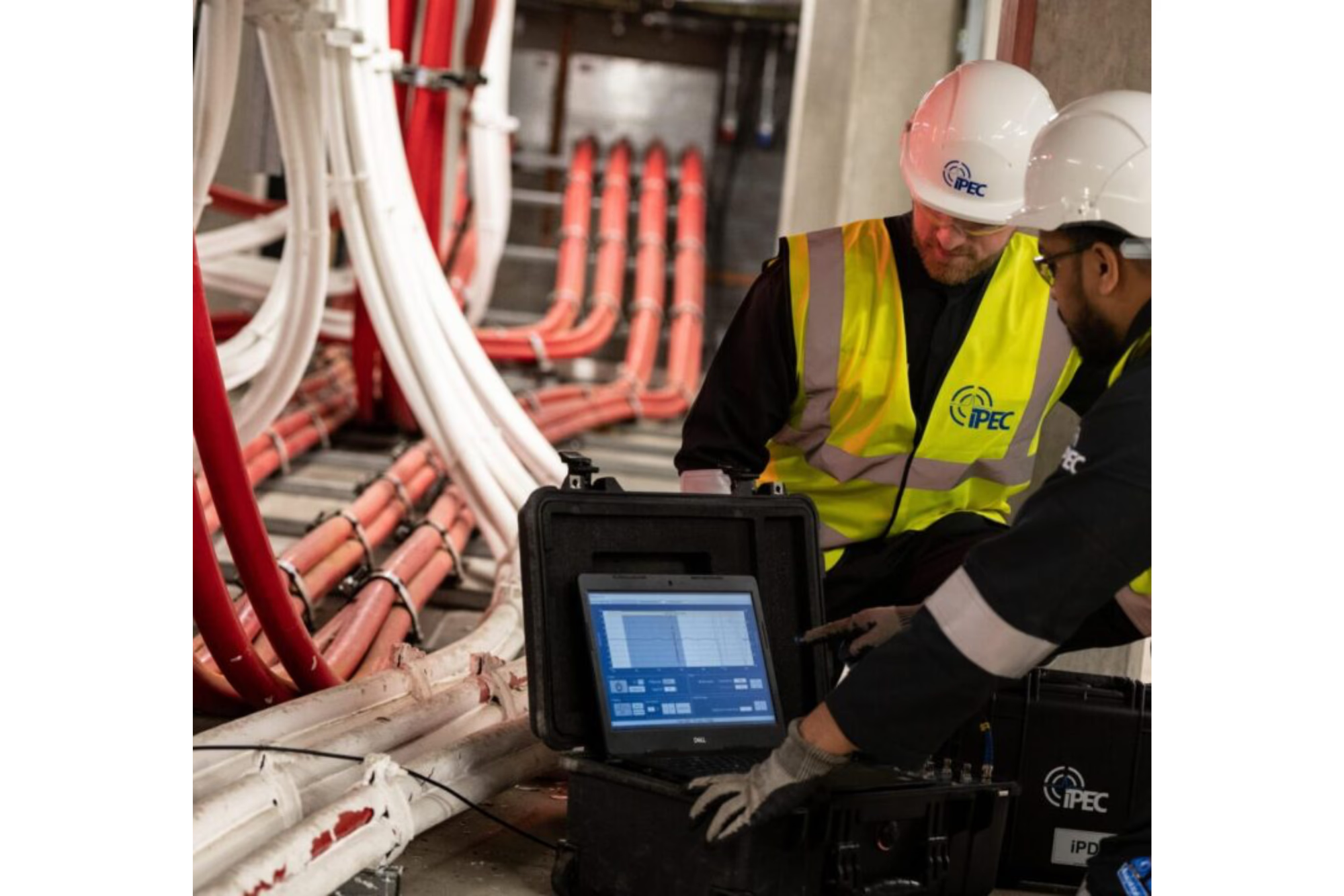
High-Frequency Current Transformer (HFCT) / Radio Frequency Current Transformer (RFCT)
- Detects: PD pulses in cables and grounded components.
- How it Works: Measures high-frequency current traveling through grounding conductors.
- Use Case: Suitable for online cable PD testing.
Optical Detection
- Detects: Light emissions from PD.
- How it Works: Uses photodetectors or cameras sensitive to visible or UV light.
- Use Case: Lab environments and enclosed visual PD monitoring.
Electrical Detection (Conventional Method)
- Detects: PD pulses using capacitive or inductive couplers.
- How it Works: Measures voltage/current signals associated with PD using oscilloscopes or PD detectors.
- Use Case: Standard in lab and field tests, both offline and online.
What is the standard for partial discharge testing?
The standards for partial discharge (PD) testing are defined by various international bodies to ensure consistency, safety, and accuracy across different applications. Here are the most widely recognized standards:
IEC 60270 – High-voltage test techniques – Partial discharge measurements
- Primary global standard for PD testing.
- Specifies methods to measure apparent charge and evaluate PD activity.
- Applicable to switchgear, transformers, cables, and rotating machines.
IEC 60034-27 / 60034-27-2 – Rotating electrical machines – PD testing
- Focuses on PD detection in motors and generators, both offline and online.
IEC 62478 – PD detection using electromagnetic and acoustic emission methods
- Covers non-conventional PD detection techniques such as UHF, TEV, and ultrasonic methods.
IEC 61869-15 – Instrument Transformers – PD performance requirements
- Relates to the PD performance of voltage and current transformers.
IEEE 400 / 400.3 – Guide for field testing and evaluation of shielded power cable systems
- Includes PD testing techniques for medium- and high-voltage cable systems.
IEEE 1434 – Guide for Partial Discharge Measurement in AC Electric Machinery
- Covers PD testing for motors and generators.
What is the IEC standard for partial discharge tests?
The primary IEC standard for partial discharge (PD) tests is:
IEC 60270 – High-Voltage Test Techniques – Partial Discharge Measurements
Key points
- Scope: Defines the methods for measuring partial discharge in electrical insulation systems under high-voltage stress.
- Measurement: Focuses on the measurement of apparent charge (in picocoulombs, pC) produced by PD.
Application
- Power transformers
- Switchgear
- High-voltage cables
- Motors and generators
- Capacitors and insulators
Test Type
- Mainly used for offline testing under controlled conditions.
Purpose
- Helps assess the quality and integrity of insulation.
- Detects early-stage defects that could lead to failure.
For non-conventional or online PD detection, additional IEC standards such as IEC 62478 and IEC 60034-27-2 are used.
What is the principle of partial discharge?
Partial discharge occurs when a localized electrical breakdown happens in a small part of the insulation system, but does not completely bridge the electrodes. It typically arises in defects such as voids, cracks, gas pockets, or along contaminated surfaces in high-voltage equipment. When the electric field stress in a localized area exceeds the dielectric strength of the insulating material (especially in gas-filled voids or interfaces), a small discharge happens, releasing energy in the form of:
- Light
- Heat
- Sound (ultrasonic)
- Electromagnetic radiation
This localized breakdown damages the insulation over time, eventually leading to full dielectric failure if left undetected.
Where It Happens:
- Voids in solid insulation
- Air gaps in cable terminations or joints
- Surface contamination on bushings or insulators
- Insulation interfaces in switchgear and transformers
Monitoring and detecting PD is critical because it is often an early warning sign of insulation degradation and potential failure.
Frequently Asked Questions
What are the methods of detection of partial discharge?
+
−
Partial discharge (PD) can be detected using electrical, acoustic, and electromagnetic methods. Instruments like PD detectors, ultrasonic sensors, and high-frequency current transformers (HFCT) are commonly used. The detection method is selected based on the type of equipment and the testing environment.
What is the standard for partial discharge testing?
+
−
Partial discharge testing is primarily governed by the IEC 60270 standard. This standard outlines reliable measurement techniques and acceptable PD thresholds. Additional standards may be referenced depending on the specific equipment or industry.
What is the IEC standard for partial discharge test?
+
−
The internationally recognized standard for PD testing is IEC 60270. It defines procedures for detecting and measuring partial discharges in high-voltage insulation systems. This ensures consistent and accurate testing results across various applications.
What is the principle of partial discharge?
+
−
Partial discharge occurs when a small electrical spark bridges part of the insulation, usually due to defects or voids. While it doesn't completely break down the insulation, repeated discharges can cause deterioration over time. Monitoring PD is essential for early fault detection and asset protection.